
We were featured in the New Hampshire Union Leader article that speaks on tick-borne illness symptoms…
MARIE VESELSKY faced an uncertain future when she contracted Lyme disease nearly 20 years ago.
Back then, she said, many people weren’t being diagnosed properly and fewer treatment options were available for the sometimes debilitating illness caused by bacteria transmitted through a tick bite.
“When I was first sick with Lyme I didn’t think I would ever get well,” she said.
But her condition improved following treatment, and eight months later she ran the Mount Washington Road Race and has done it four times since.
Now the registered dietitian and her medical colleague, nurse practitioner Dustin Forrest, specialize in treating Lyme patients through New Hampshire Integrated Health Care, and with the snow gone and spring in full swing, their offices in Dover and Conway are already seeing an uptick in patients.
It’s still early in the season, but with the arrival of warmer weather it appears that ticks have wasted no time latching onto people and pets and prompting warnings from public health officials.
“A lot of people are dog walkers so they’re already picking them up and bringing them inside. It seems with climate change we’re not getting that good hard freeze in the winter anymore that would kill them off so they’re surviving the winter months. They’re coming back stronger and we’re seeing more of them and consequently more people are coming in,” said Forrest, who took an interest in Lyme disease treatment because his wife has chronic Lyme and his 10-year-old daughter also contracted the illness.
According to the Tick Bite Data Tracker provided by the U.S. Centers for Disease Control and Prevention, hospital visits for tick bites in the Northeast have jumped from approximately 5 per 100,000 emergency department visits in February to more than 50 per 100,000 in April. Data show that the Northeastern region continues to see the highest number of patients suffering from tick bites in the country.
Officials from the New Hampshire Department of Health and Human Services said ticks can be active year-round, but are most active during warmer months in New Hampshire. That period typically runs from April to November with the risk for tick bites increasing as the snow melts and ticks emerge from under the leaf litter and become more active.
Pest Control Calls
With the arrival of another tick season, the phones at pest control companies are already ringing as homeowners try to keep the ticks lurking around their yards at bay.
Pesky Critters Pest Control in Raymond typically begins tick treatments for customers at the end of April or early May.
“Whenever we treat, we want products to be able to stick to leaves and things like that because that’s where ticks may be,” said Danielle Clough, who’s worked for the family business for 10 years.
Clough said it’s too soon to know how tough the season will be as people have just recently begun getting outside to enjoy the spring weather, but if past years are any indication, those in the pest business will have another busy year.
“Each year it’s getting worse and worse. Last year was definitely a bad year. I can say from personal experience with my own dog,” she said.
Precision Pest Control in Londonderry has seen a recent increase in calls for tick treatment and technicians have been out in the field getting an early jump on the season.
“The ticks are bad every year. They don’t seem to go away in the winter like they used to. They seem to be lasting longer and coming back sooner,” said Steve Vargus, a pest technician whose father owns the company.
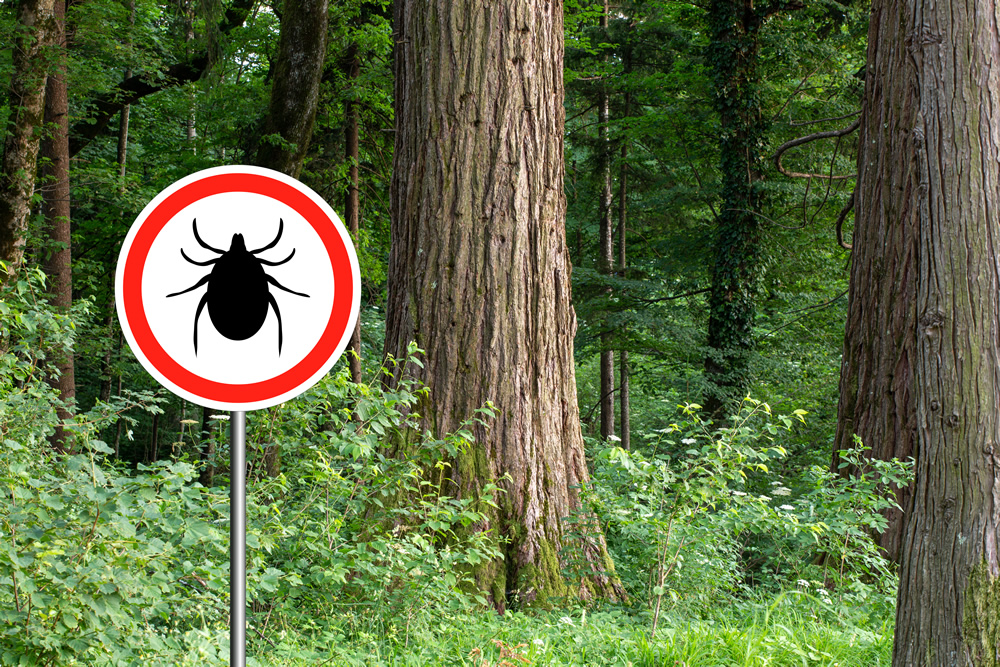
Local health officials are urging residents to take precautions. Towns like Bedford are taking steps to alert the public by placing signs regarding mosquitoes and ticks at all local trailheads.
According to Bedford Health Inspector Jaime Rice, the town also has access to tracking and surveillance data and could issue a public health advisory if there’s important new information the public would need to know. Rice noted the prevalence of tick-borne diseases locally, which is reflected in CDC data showing that between 2019 and 2022 there were as many as 957 cases of Lyme disease reported in Hillsborough County alone.